Loading...
Navigation
Close

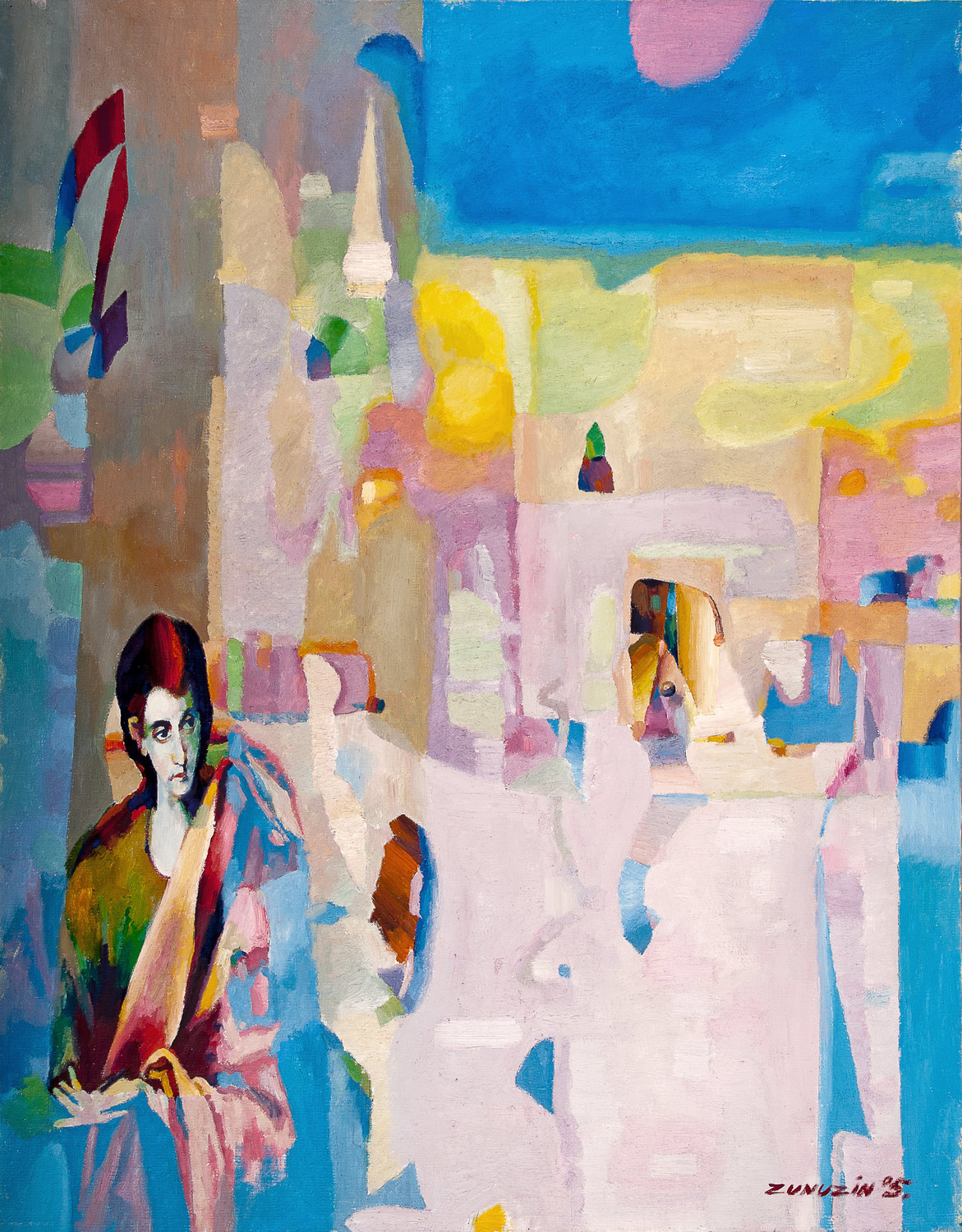
St. John the Evangelist (El Greco Improvisation) by Zunuzin

St. John the Evangelist (El Greco Improvisation)
  • St. John the Evangelist (El Greco Improvisation)
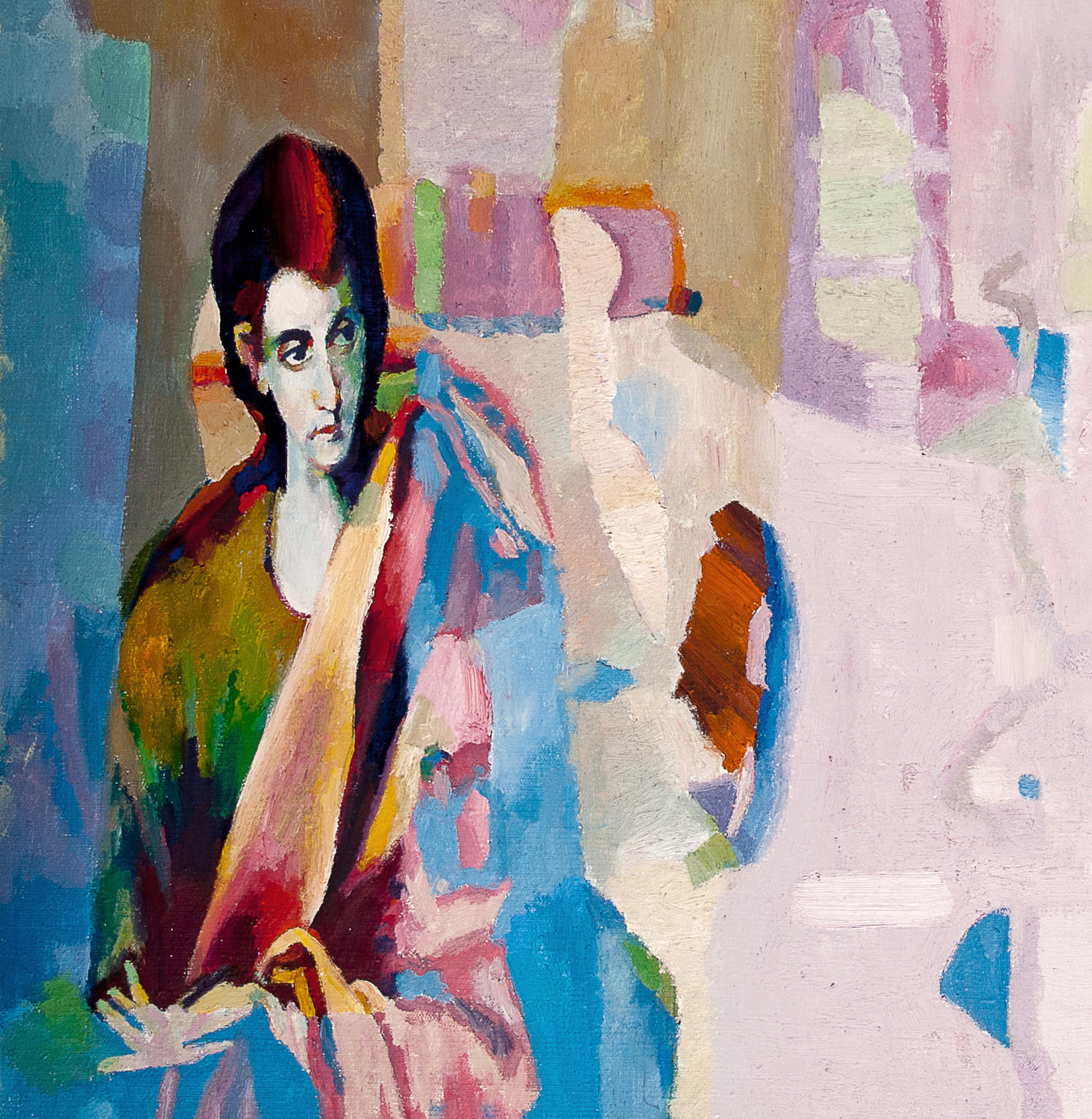
  • Fragment - St. John the Evangelist

  • 73x58 cm, archival pigment print on canvas, signed by author, limited edition of 100 

$399.00


Artwork description
The original artwork is oil painting on canvas, size 115x90 cm, and is available for sale. If you have to buy original oil artwork please e-mail to Artist.

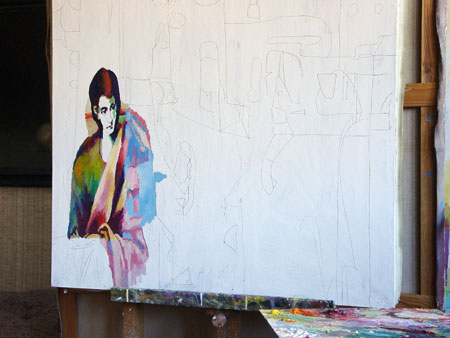
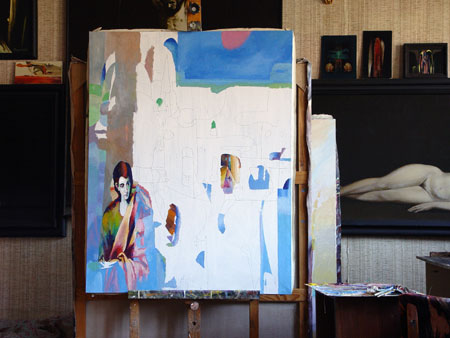
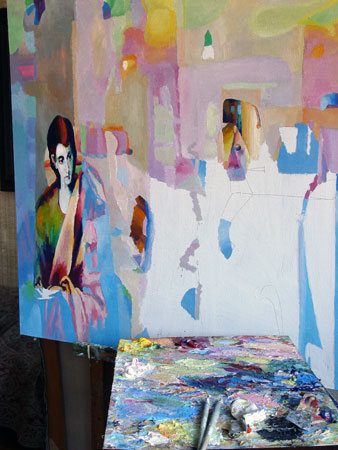
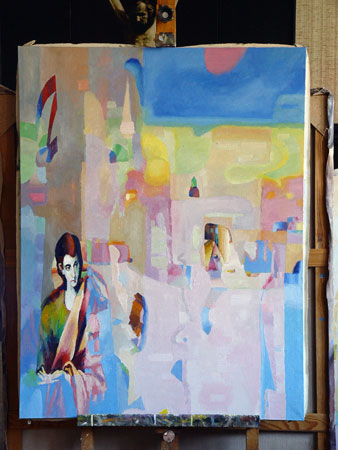
Painting process by Zunuzin

Year created: 2005
Note: © zunuzin.com watermark is only used online and does not appear on your print or file.

Print information "St. John the Evangelist (El Greco Improvisation)" (buy oil painting)

Tags "St. John the Evangelist (El Greco Improvisation)" (buy oil painting)

Additional information "St. John the Evangelist (El Greco Improvisation)" (buy oil painting)

El Greco - Disrobing of Christ

El Greco
"St. John the Evangelist", 1600
Museo del Prado, Madrid

Apostle St John the Evangelist was the son of Zebedee, and brother of James and the presumed author of the fourth gospel and, by tradition, of the Apocalypse. He was one of the first to be called to follow Christ. He appears with Peter and James in the scene of the Transfiguration. At the Last Supper he is shown leaning his head on the breast of Christ, from the tradition that identified him with 'the disciple whom Jesus loved'. The Agony in the Garden shows him asleep with Peter and James, while Christ prays. In one version of the Crucifixion John and the Virgin are seen standing alone at the foot of the cross. He is shown among the figures at the Descent from the Cross, the lamentation (Pietà) that followed and at the Entombment. John appears at the Death of the Virgin and her Assumption because the apocryphal writings on which the scenes are based were ascribed to him. During the apostolic ministry John often accompanied the apostle Peter. He was traditionally identified with John who was exiled to the island of Patmos, where he wrote the book of Revelation. He was believed to have died at Ephesus at a great age.

John's attributes are a book or scroll, in allusion to his writings, an eagle which may hold a pen or inkhorn in its beak, a chalice from which a snake emerges, a cauldron and a palm - not the martyr's but one belonging to the Virgin and handed on to John at her death; he holds it only in scenes relating to her. John may be represented in two distinct ways: as the apostle he is young, sometimes rather effeminate and graceful, typically with long, flowing, curly hair, and is beardless; or in complete contrast as the evangelist, he is an aged greybeard. Among his inscriptions the commonest are 'Passus sub Pontio Pilato' - 'He suffered under Pontius Pilate', from the Apostles' Creed; 'In principio erat verbum' - 'In the beginning was the Word' (John 1:1); 'Lignum vitae afferens fructus' - 'The tree of life which yields (twelve crops of) fruit' (Rev. 22:2) Via

Ask a question about artwork "St. John the Evangelist (El Greco Improvisation)" (buy oil painting)

Please type the characters you see in the picture below.